DOI: 10.12890/2025_005404
Severe hypoxaemia and haemodynamic instability following salt tablet broncho-aspiration: in-hospital mimicking of saltwater drowning
Authors
 ermes.lupieri@eoc.ch
Keywords
Salt tablet, broncho-aspiration, drowningAbstract
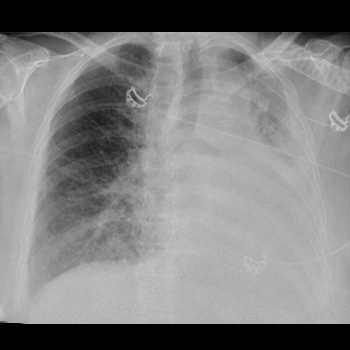
A 70-year-old woman, hospitalised for asymptomatic hyponatraemia secondary to syndrome of inappropriate antidiuretic hormone secretion (SIADH), required emergency intubation due to severe acute respiratory failure and haemodynamic instability following broncho-aspiration of a salt tablet. We hypothesise that a pathophysiological mechanism resembling saltwater drowning may have contributed to the clinical presentation.
References
- Warren AM, Grossmann M, Christ-Crain M, Russell N. Syndrome of inappropriate antidiuresis: from pathophysiology to management. Endocr Rev 2023;44:819–861. doi: 10.1210/endrev/bnad010
- Calvo Latorre J, Senanayake R, Bashari WA. Salt tablets safely increase serum sodium in hospitalised elderly patients with hyponatraemia secondary to refractory idiopathic syndrome of inappropriate anti-diuresis. Cureus 2022;14:e24367. doi: 10.7759/cureus.24367
- Miyazato T, Ishikawa T, Michiue T, Maeda H. Molecular pathology of pulmonary surfactants and cytokines in drowning compared with other asphyxiation and fatal hypothermia. Int J Legal Med 2012;126:581–587. doi:10.1007/s00414-012-0698-2
- Bierens JJ, Lunetta P, Tipton M, Warner DS. Physiology of drowning: a review. Physiology (Bethesda) 2016;31:147–166. doi:10.1152/physiol.00002.2015
- Orlowski JP, Szpilman D. Drowning. Rescue, resuscitation, and reanimation. Pediatr Clin North Am 2001;48:627–646. doi:10.1016/s0031-3955(05)70331-x
Published
2025-05-22
Issue
Categories
How to Cite
1.
Lupieri E, Patrese E, Chiesa AF, Corti F, Previsdomini M. Severe hypoxaemia and haemodynamic instability following salt tablet broncho-aspiration: in-hospital mimicking of saltwater drowning. EJCRIM [Internet]. 2025 May 22 [cited 2026 Nov. 18];12(6). Available from: https://ojs.wedare.app/ejcrim/article/view/5404