DOI: 10.12890/2025_005425
Massive haemoptysis and cardiopulmonary arrest secondary to acute pulmonary histoplasmosis in a traveller from China successfully managed with cryoextraction
Authors
 h26ms.kondo@gmail.com
Keywords
Massive haemoptysis, histoplasmosis, Histoplasma capsulatum, acute respiratory distress syndrome, ARDSAbstract
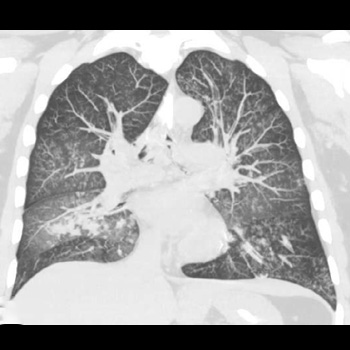
Histoplasma capsulatum is a dimorphic fungus that grows as a mould in the environment and as a yeast in human tissues causing histoplasmosis. Histoplasmosis varies in clinical presentations and severities of the illness and is endemic in certain areas of North, Central, and South America, Africa, and Asia. A 47-year-old previously healthy male presented with a sudden onset of massive haemoptysis requiring emergent intubation in the emergency department. Bronchoscopy revealed blood clots within the endotracheal tube extending into both main bronchi with active bleeding from both airways. Subsequently, the patient experienced a cardiac arrest with asystole, requiring three rounds of cardiopulmonary resuscitation before achieving return of spontaneous circulation. A computed tomography scan of the chest demonstrated diffuse ground-glass opacities. Collateral information obtained from the patient’s family indicated travel to Southeast China two months prior to hospitalization. Histoplasma antigen testing returned positive, and antifungal therapy was initiated. Along with serial suctioning and forceps use via fibreoptic bronchoscopy, cryoextraction of blood clots from the bronchi was performed, leading to successful extubation and hospital discharge. This case highlights the need to consider histoplasmosis in patients who have travelled to endemic areas and present with severe respiratory symptoms.
References
- Pan B, Chen M, Pan W, Liao W. Histoplasmosis: a new endemic fungal infection in China? Review and analysis of cases. Mycoses 2013;56:212–221. doi: 10.1111/myc.12029
- Galgiani JN, Kauffman CA. Coccidioidomycosis and Histoplasmosis in Immunocompetent Persons. N Engl J Med 2024;390:536–547. doi: 0.1056/nejmra2306821
- Shaffer JP, Barson W, Luquette M, Groner JI, Hogan MJ, Allen E. Massive hemoptysis as the presenting manifestation in a child with histoplasmosis shaffer et al. Massive hemoptysis. Pediatr Pulmonol 1997;24:57–60. doi: 10.1002/(sici)1099-0496(199707)24:1<57::aid-ppul10>3.0.co;2-9
- Wheat LJ, Freifeld AG, Kleiman MB, Baddley JW, McKinsey DS, Loyd JE et al. Clinical Practice Guidelines for the Management of Patients with Histoplasmosis: 2007 Update by the Infectious Diseases Society of America. Clin Infect Dis 2007;45:807–825. doi: 10.1086/521259
- Imaging EP on T, Olsen KM, Manouchehr-pour S, Donnelly EF, Henry TS, Berry MF et al. ACR Appropriateness Criteria Hemoptysis. J Am Coll Radiol 2020;17:S148–159. doi: 10.1016/j.jacr.2020.01.043
- Mondoni M, Carlucci P, Job S, Parazzini EM, Cipolla G, Pagani M et al. Observational, multicentre study on the epidemiology of haemoptysis. Eur Respir J 2018;51:1701813. doi: 10.1183/13993003.01813-2017
- Ibrahim WH. Massive haemoptysis: the definition should be revised. Eur Respir J 2008;32:1131-1132. doi: 10.1183/09031936.00080108
- Schmidt LH, Schulze AB, Goerlich D, Schliemann C, Kessler T, Rottmann V et al. Blood clot removal by cryoextraction in critically ill patients with pulmonary hemorrhage. J Thorac Dis 2019;11:4319–4327. doi: 10.21037/jtd.2019.09.46
- DiBardino DM, Lanfranco AR, Haas AR. Bronchoscopic Cryotherapy. Clinical Applications of the Cryoprobe, Cryospray, and Cryoadhesion. Ann Am Thorac Soc 2016;13:1405–1415. doi: 10.1513/annalsats.201601-062fr
- Yiu W, Basco MT, Aruny JE, Cheng SW, Sumpio BE. Cryosurgery: A review. Int J Angiol 2007;16:1–6. doi: 10.1055/s-0031-1278235
- Linder KA, Kauffman CA. Current and New Perspectives in the Diagnosis of Blastomycosis and Histoplasmosis. J Fungi 2020;7:12. doi: 10.3390/jof7010012
- Hage CA, Ribes JA, Wengenack NL, Baddour LM, Assi M, McKinsey DS, et al. A Multicenter Evaluation of Tests for Diagnosis of Histoplasmosis. Clin Infect Dis 2011;53:448–454. doi: 10.1093/cid/cir435
- Barros N, Wheat JL, Hage C. Pulmonary Histoplasmosis: A Clinical Update. J Fungi 2023;9:236. doi: 10.3390/jof9020236
- Ling Q, Zhu W, Lu Q, Jin T, Ding S. Disseminated histoplasmosis in an immunocompetent patient from an endemic area. Medicine 2018;97:e11486. doi: 10.1097/md.0000000000011486
- De D, Nath UK. DISSEMINATED HISTOPLASMOSIS IN IMMUNOCOMPETENT INDIVIDUALS- NOT A SO RARE ENTITY. Mediterr J Hematol Infect Dis 2014;7:2015028. doi: 10.4084/mjhid.2015.028
- Zhou L-H, Jiang Y-K, Li R-Y, Huang L-P, Yip C-W, Denning DW et al. Risk-Based Estimate of Human Fungal Disease Burden, China - Volume 26, Number 9—September 2020 - Emerging Infectious Diseases journal - CDC. Emerg Infect Dis 2020;26:2137–47. doi: 10.3201/eid2609.200016.
- Wang TL, Cheah JS, Holmberg K. Case report and review of disseminated histoplasmosis in South-East Asia: clinical and epidemiological implications. Trop Med Int Heal 1996;1:35-42. doi: 10.1046/j.1365-3156.1996.d01-10.x