DOI: 10.12890/2026_006231
Adult-onset Still’s disease presenting with progressive motor neuropathy
Authors
 ana.c.freire@ulsrl.min-saude.pt
Keywords
Adult-onset Still’s disease, hyperferritinaemia, fever of unknown origin, polyneuropathy, interleukin-1 inhibitorsAbstract
Introduction: Adult-onset Still’s disease (AOSD) is a rare systemic autoinflammatory disorder characterized by dysregulation of the innate immune system and excessive cytokine production. Its presentation is often non-specific and heterogeneous, making diagnosis challenging and one of exclusion.
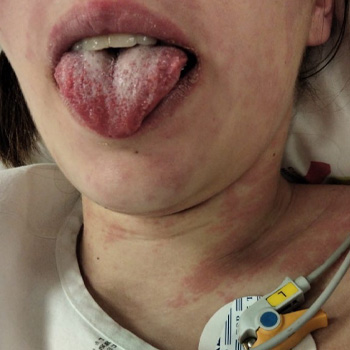
Case description: We report the case of an 18-year-old woman admitted with quotidian fever, frequent episodes of tonsillitis, intermittent skin rash and progressive distal lower limb weakness. Neurological assessment demonstrated progressive motor neuropathy. Laboratory findings revealed neutrophilic leucocytosis, significantly elevated inflammatory markers and hyperferritinaemia. Extensive investigation excluded infectious, malignant and autoimmune causes, and the patient met the Yamaguchi classification criteria for AOSD. Treatment with systemic corticosteroids, colchicine and the interleukin-1 receptor antagonist resulted in rapid and sustained clinical improvement.
Conclusion: This case highlights the diagnostic complexity of AOSD and emphasizes the importance of considering this diagnosis in patients with persistent fever, hyperferritinaemia and rare neurological manifestations.
References
- Feist E, Mitrovic S, Fautrel B. Mechanisms, biomarkers and targets for adult-onset Still’s disease. Nat Rev Rheumatol 2018;14:603–618. doi: 10.1038/s41584-018-0081-x
- Fautrel B, Mitrovic S, De Matteis A, Bindoli S, Anton J, Belot A, et al. EULAR/PReS recommendations for the diagnosis and management of systemic juvenile idiopathic arthritis and adult-onset Still’s disease. Ann Rheum Dis 2024;83:1614–1627. doi: 10.1136/ard-2024-225851
- Yamaguchi M, Ohta A, Tsunematsu T, Kasukawa R, Mizushima Y, Kashiwagi H, et al. Preliminary criteria for classification of adult Still’s disease. J Rheumatol 1992;19:424-430.
- Gerfaud-Valentin M, Jamilloux Y, Iwaz J, Sève P. Adult-onset Still’s disease. Autoimmun Rev 2014;13:708–722. doi: 10.1016/j.autrev.2014.01.058