DOI: 10.12890/2026_007498
Gluteus medius tuberculosis masked by lumbar spondylolisthesis: a diagnostic challenge with successful surgical and anti-tubercular management
Authors
 anujkumarpandey030@gmail.com
Keywords
Muscular tuberculosis, gluteus medius, spondylolisthesis, extrapulmonary tuberculosis, diagnostic anchoringAbstract
Introduction: Primary skeletal muscle tuberculosis is an uncommon manifestation of extrapulmonary tuberculosis and frequently presents with non-specific symptoms, resulting in delayed diagnosis. Coexisting spinal pathology may further obscure the diagnosis by providing an alternative explanation for the patient’s symptoms.
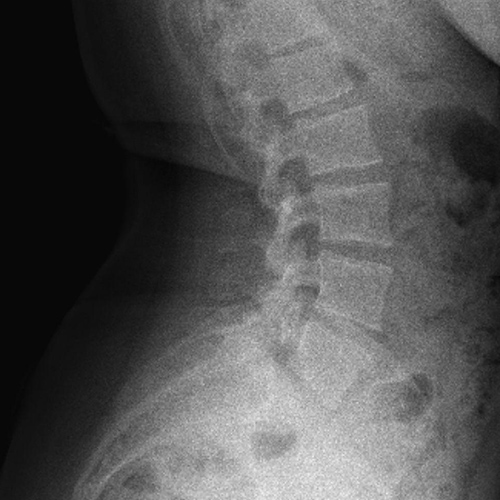
Case description: An 18-year-old female presented with a six-month history of progressive low back pain radiating to the right lower limb. Initial lumbar radiography demonstrated Grade I L5 spondylolisthesis; her symptoms were initially attributed to mechanical spinal disease. Despite conservative management, she subsequently developed painful swelling over the right gluteal region. magnetic resonance imaging (MRI) revealed extensive inflammatory changes involving the right gluteus medius muscle with intramuscular fluid collection, while computed tomography (CT) demonstrated adjacent iliac cortical destruction. Surgical debridement was performed; however, postoperative wound dehiscence and sinus tract formation required repeat debridement and vacuum sealing drainage.
Discussion: Histopathological examination demonstrated necrotic tissue with lymphocytic infiltration, where bacterial cultures remained negative. The patient received standard anti-tubercular therapy, resulting in progressive clinical improvement and complete radiological resolution on follow-up MRI.
Conclusion: Persistent buttock pain or swelling that fails to respond as expected to treatment for degenerative spinal disease should prompt consideration of musculoskeletal tuberculosis, particularly in endemic regions.
References
- Leonard MK, Blumberg HM. Musculoskeletal Tuberculosis. Microbiol Spectr. 2017;5(2):10.1128/microbiolspec.tnmi7-0046-2017. doi: 10.1128/microbiolspec.TNMI7-0046-2017.
- Zeng Y, Liu Y, Xie Y, Liang J, Kuang J, Lu Z, Zhou Y. Muscular Tuberculosis: A New Case and a Review of the Literature. Front Neurol. 2019;10:1031. doi: 10.3389/fneur.2019.01031.
- Jones VS, Phillip C. Isolated gluteal tuberculosis. Indian Pediatr. 2005;42(9):955.
- Djaja YP, Phedy P, Silitonga J, Librianto D, Saleh I. Submuscular gluteal abcess: An unusual presentation of rare sacral tuberculosis. Int J Surg Case Rep. 2019;54:55-59. doi: 10.1016/j.ijscr.2018.11.046.
- Swol J, Boehm J, Jakoubova R, Ficker JH. Gluteal abscess caused by Mycobacterium tuberculosis. Tech Coloproctol. 2020;24(12):1315-1316. doi: 10.1007/s10151-020-02357-9.